Home / Slider / Russian painter, philosopher, archaeologist and cultural activist
Russian painter, philosopher, archaeologist and cultural activist
The Master Artist of the Himalayas: Honouring the Legacy of Nicholas Roerich on His 152nd Birth Anniversary
By Debasmita Moulick
senior journalist
literary scholar and an accomplished translator
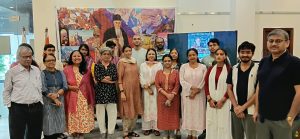
A profound, meditative silence enveloped the exhibition hall at Gorky Sadan, the Russian House in Kolkata. On the screen, a documentary video flashed a mesmerizing sequence of mountain peaks, painted in vibrant, otherworldly hues. No one in the audience moved. They were completely spellbound by the mystic portrayal of the Himalayas – the majestic landscapes that the legendary master famously called the “spiritual heart of the world.”
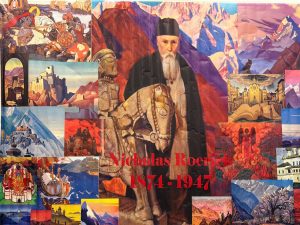
This captivating moment marked the eve of the 152nd birth anniversary of Nicholas Roerich (9 October 1874 – 13 December 1947). To honour the visionary Russian painter, philosopher, archaeologist, and cultural activist, the Russian House in Kolkata hosted a heartfelt tribute. Rossotrudnichestvo, the cultural powerhouse behind Russian Houses globally, celebrated its own historic centenary last year.
A Polymath Who Bridged East and West
Roerich’s legacy is monumental. Hailing from an affluent Saint Petersburg family, he pursued dual training in law and fine arts. The upheaval of the 1917 Bolshevik Revolution turned him into an expatriate, leading him across Europe and North America before his enduring fascination with Eastern philosophy drove him to launch monumental, five-year scientific and spiritual expeditions deep into Central Asia.
Roerich eventually found his ultimate sanctuary in India, spending his final decades in the tranquil Kullu Valley of Naggar, Himachal Pradesh. He created over 7,000 paintings, authored 29 books, and founded the Urusvati Himalayan Research Institute. His deep bond with India transcended a mere artistic chapter; it was a profound spiritual homecoming that redefined the final decades of his life. Today, he stands as the only international artist designated among India’s elite Navratnas (National Art Treasures), alongside legendary masters like Raja Ravi Varma and Rabindranath Tagore.
Beyond the canvas, Roerich left an imperishable mark on global peace by spearheading the Roerich Pact, a landmark international treaty legally binding nations to protect cultural heritage during times of war.
Captivating Kolkata’s Art Lovers
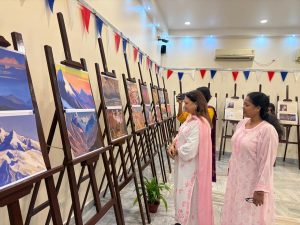
The tribute began with an immersive audio-visual presentation on Roerich’s life and works by Madhabi Bhattacharya, Director of the Institute of Russian Language. Alongside the talk, a comprehensive illustrative exhibition featuring over 100 exhibits was unveiled. The exhibition remains open to the public until 16 October, from 12:00 PM to 6:00 PM (excluding weekends).
The event sparked fascinating conversations about Roerich’s deep-rooted connection to India. Language student Abahan Datta shared his excitement over the historic 1920 meeting between Roerich and Rabindranath Tagore in London. “I was captivated to learn that the historic painting Roerich gifted to Rabindranath Tagore, The Old King, is now housed right here in Bengal at Visva-Bharati’s Nandan Art Museum,” noted Abahan. Painted in 1910, the masterpiece features a striking expression that many believe mirrors Tagore’s own soul, serving as an enduring testament to their creative synergy.
Another student, Rajasri Ray, spoke passionately about Roerich’s revolutionary use of colour. “He is all about colour, especially those striking shades of blue,” Ray noted, recalling a previous visit to see Roerich’s Himalayan Studies Series at the Karnataka Chitrakala Parishath in Bengaluru. “His intense love for nature deeply touches the audience – he essentially brings the Himalayas right close to us.”
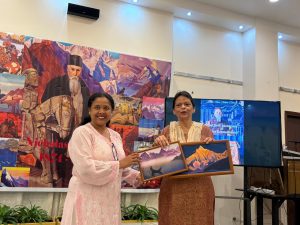
The cross-cultural impact of Roerich’s art was beautifully highlighted by Rupa Chakraborty, a Kathak dance teacher who previously worked through the ICCR at the Indian Embassy in Bishkek. She brought along four cherished Roerich paintings gifted to her by the Roerich Museum in Kyrgyzstan’s capital. “I am currently doing my PhD in the history of Kathak through the perspective of paintings, so Roerich’s art is of great interest to me,” she shared.
The Magic of “Roerich Blue“
As the tribute drew to a close, it was the master’s ethereal palette – most of all, the legendary “Roerich Blue” – that left an indelible mark on every heart in the room. This deep, vibrant hue, which Roerich used to capture the sublime peace of Himalayan skies, is the very same colour Soviet cosmonaut Yuri Gagarin later evoked to describe the awe of seeing Earth from space. As morning turned to afternoon outside Gorky Sadan, a powerful, unspoken awe kept the entire room perfectly still. Time seemed to stand still, proving that even a century later, Roerich’s brushstrokes do not merely depict landscapes – they serve as a gateway to lift us from our everyday lives, carrying our spirits to the tranquil, spiritual heights he loved so dearly.
#DebasmitaMoulick #Legacy of NicholasRoerich #NicholasRoerich Moscow 2026-10-12
Tags #DebasmitaMoulick #Legacy of NicholasRoerich #NicholasRoerich Moscow
Check Also
वेद पूजन कार्यक्रम में वैदिक ज्ञान और पंचतत्व वेद पूजन कार्यक्रम में वैदिक ज्ञान, ...
 Ghoomta Aina | Latest Hindi News | Breaking News घूमता आईना | News and Views Around the World


 Ghoomta Aina | Latest Hindi News | Breaking News घूमता आईना | News and Views Around the World